
An AI auto blogging WordPress plugin is a tool that integrates with your site to automatically generate and publish blog posts using artificial intelligence. These plugins connect to language models like GPT-4 to create content based on keywords or topics, aiming to automate your content marketing efforts.
However, the best approach isn't always a plugin. While they operate inside your WordPress dashboard, they can also introduce site bloat, security risks, and require constant manual strategy. In this guide, we'll cover the top plugins and introduce a more powerful, autonomous alternative.
How an AI Auto Blogging Plugin Works
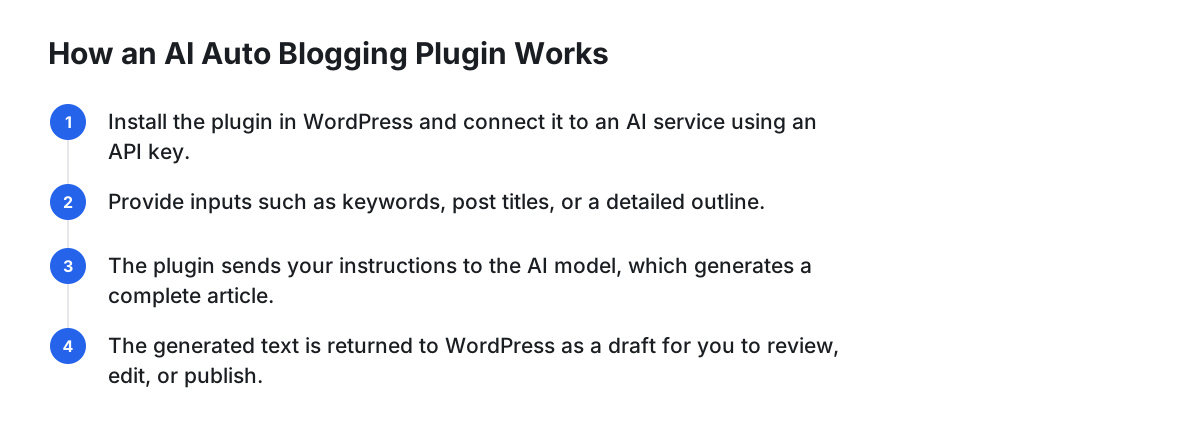
An AI auto blogging plugin for WordPress acts as a bridge between your website and a powerful AI model like OpenAI's GPT or Google's Gemini. The process is generally straightforward:
- Installation & Setup: You install the plugin from the WordPress repository or upload it manually. You then connect it to an AI service, which usually requires an API key from a provider like OpenAI.
- Input/Prompting: You provide the plugin with instructions. This can range from a simple keyword or blog post title to a detailed outline, target audience, and desired tone of voice.
- Content Generation: The plugin sends your instructions via API to the AI model. The model processes the request and generates a complete article, often including headings, paragraphs, and lists.
- Publishing: The generated text is sent back to your WordPress site and populated into a new draft post. From there, you can review, edit, and schedule it for publication, or in some cases, have it publish automatically.
These tools aim to solve the biggest challenge in content marketing: consistency. By automating creation, they promise a steady stream of new content to attract organic traffic.
Key Features to Look for in 2026
The technology is evolving rapidly, and the difference between a helpful assistant and a content farm generator is vast. Here are the critical features to evaluate.
- Content Quality & AI Model: The single most important factor. Does the plugin use the latest, most capable AI models (e.g., GPT-4o, Claude 3 Opus)? Look for tools that produce nuanced, well-structured, and genuinely helpful content, not just generic, keyword-stuffed text.
- SEO Optimization: A good plugin does more than just write. It should integrate SEO best practices, including features for generating meta descriptions, optimizing title tags, suggesting internal links, and ensuring proper heading structure (H2s, H3s).
- Ease of Setup and Use: The purpose of automation is to save time. The tool should have a clean, intuitive interface within WordPress, require minimal technical setup, and make it simple to configure and generate articles.
- Automation & Scheduling: True automation requires robust scheduling. You should be able to set up content campaigns that run automatically based on a list of keywords, publishing on a predefined schedule (e.g., three posts per week) without manual intervention for each article.
- Image & Media Integration: Articles with visuals perform better. Top-tier plugins can automatically generate or source relevant, royalty-free images (using models like DALL-E or Midjourney) and embed them within the content.
- Customization and Control: You need to be able to guide the AI. Look for options to set the tone of voice, define the target audience, specify article length, and provide custom instructions or outlines to ensure the content aligns with your brand.
The Best AI Auto Blogging WordPress Plugins
Here are some of the most capable and popular plugins available today. Each offers a different approach to AI-powered content automation directly within your WordPress dashboard.
1. AI Power
AI Power is one of the most comprehensive AI toolkits for WordPress, extending far beyond just content generation. It's an all-in-one solution that integrates a massive suite of tools, from a ChatGPT-style chatbot to image generation and content writing.
- Key Features: Uses your own OpenAI API key, offers multiple GPT models, features a bulk article writer, includes an image generator (DALL-E 2 & Stable Diffusion), and has SEO optimization tools.
- How it Works: You configure campaigns by providing keywords, and the plugin can generate and publish articles in bulk on a schedule. Its Content Writer provides a rich editor for fine-tuning prompts and generating content piece by piece.
- Best For: Users who want a complete AI utility belt inside WordPress and are comfortable managing their own API keys and prompts.
- Pricing: Offers a free version with limited capabilities. Pro plans start at $9.99/month, which unlocks premium features but still requires you to pay for your own AI model API usage.
2. AI Auto Tool
AI Auto Tool is another powerful contender focused on automating content creation from various sources, not just AI generation. It can pull content from RSS feeds, social media, and various APIs, then use AI to rewrite it into a unique post.
- Key Features: Supports multiple AI providers (OpenAI, Google AI, etc.), automatic content spinning/rewriting, video-to-post conversion, and robust campaign scheduling options.
- How it Works: You set up a campaign based on a keyword or a content source (like a YouTube channel). The plugin automatically fetches new content, uses AI to transform it into a blog post, and publishes it to your site.
- Best For: Users focused on content aggregation and curation who want to use AI to repurpose existing content from across the web.
- Pricing: A license on the CodeCanyon marketplace is typically a one-time purchase (around $39), but this does not include the ongoing cost of API usage for the AI models.
3. Rank Math Content AI
While Rank Math is primarily known as a leading SEO plugin, its Content AI feature brings powerful AI writing capabilities directly into the content creation workflow. It's less of a pure "auto blogger" and more of an AI-powered writing assistant.
- Key Features: Deep integration with Rank Math SEO, AI-powered writing suggestions within the WordPress editor, keyword research tools, and a proprietary credit system.
- How it Works: As you write, you can use Content AI to generate paragraphs, outlines, or entire sections based on your target keywords. It scores your content against ranking competitors and provides clear optimization instructions.
- Best For: Content creators who want to write articles themselves but use AI to speed up the process and ensure every post is perfectly optimized for SEO.
- Pricing: Content AI operates on a credit system. A free plan is included with Rank Math, with paid plans starting at $5.75/month for more credits and advanced features.
The Hidden Costs of a Plugin-Only Approach
While plugins offer convenience by living inside your WordPress admin, this approach comes with significant trade-offs that are often overlooked.
- Site Performance (Bloat): Every active plugin adds code that must be loaded on your site. Heavy, feature-rich AI plugins can slow down your website's load time, negatively impacting both user experience and SEO rankings.
- Security Risks: Each plugin is a potential entry point for hackers. A poorly maintained or vulnerable plugin can compromise your entire website. The more plugins you add, the larger your attack surface becomes.
- Compatibility Conflicts: WordPress ecosystems are complex. A new AI plugin can conflict with your theme or other existing plugins, causing bugs, breaking features, or even crashing your site. Troubleshooting these issues is time-consuming.
- Maintenance Overhead: Plugins require constant updates to patch security holes and maintain compatibility with new versions of WordPress. This adds another recurring task to your to-do list.
- Limited Strategic Scope: Most importantly, a plugin is just a tool. It doesn't create the strategy. You still have to do the keyword research, build a content calendar, and analyze performance. The plugin only automates the writing part, not the whole SEO content workflow.
For businesses that are serious about using content to drive growth, a plugin is often just a starting point, not the final solution.
The No-Plugin Alternative: Autonomous SEO Platforms
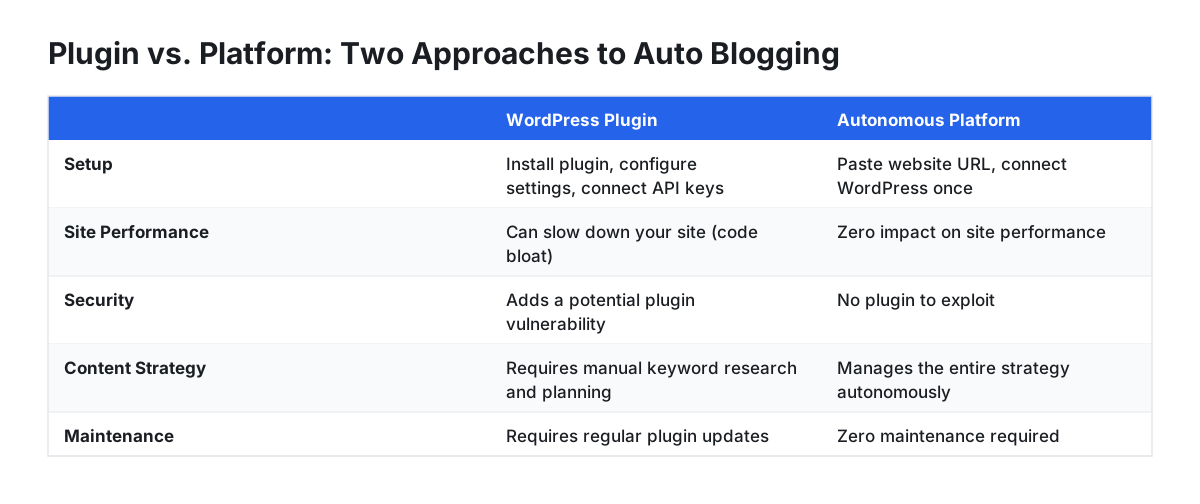
Instead of installing another piece of software on your site, a modern alternative is to use an external, autonomous platform that handles the entire content SEO lifecycle. This approach connects to your WordPress site to publish content but runs all its heavy-lifting operations on its own dedicated servers.
This is the model used by PilotScribe. It’s designed to put your blog's growth on autopilot without the downsides of a traditional plugin.
Here’s how it differs:
- No Plugin to Install: Setup doesn't involve uploading a zip file or complicating your WordPress install. You simply paste your website URL into PilotScribe. The platform analyzes your business and connects securely to your WordPress site to publish finished articles. This means zero impact on your site's performance or security.
- Fully Autonomous Strategy: A platform like PilotScribe goes beyond just writing. It performs the complete workflow: it analyzes your business, finds high-opportunity keywords using real search-volume data, writes long-form SEO-optimized articles, and schedules them for publication.
- Performance-Driven Optimization: The work doesn't end after hitting "publish." PilotScribe watches how each published article ranks on Google. It proactively improves posts that underperform by rewriting weak titles or refreshing content, turning page-two articles into page-one winners.
- Set It and Forget It: Once launched, it runs on its own. There is no need to build a content strategy or manage an editorial calendar. You retain full control with a built-in 24-hour review window to approve or edit any article before it goes live.
If your goal is to get the business results of a high-performing blog without adding another complex tool to manage, an autonomous platform is the most direct path. You get the content and the traffic without the technical overhead.
| Feature | WordPress Plugin Approach | Autonomous Platform (PilotScribe) |
|---|---|---|
| Setup | Install plugin, configure settings, connect API keys | Paste website URL, connect WordPress once |
| Site Performance | Can slow down site with code bloat | Zero impact on site performance |
| Security | Adds a potential plugin vulnerability | No plugin to exploit; secure external service |
| Keyword Research | Manual input or basic suggestions | Fully automated, data-driven keyword discovery |
| Content Strategy | Requires manual planning and keyword lists | Manages entire content strategy autonomously |
| Performance | Publishes and forgets; no feedback loop | Dynamic; monitors rankings and improves articles |
| Maintenance | Requires regular plugin and compatibility updates | Zero maintenance required; platform is managed externally |
FAQ
What is the best AI auto blogging plugin for WordPress?
For users who want deep integration and a suite of tools within their WordPress dashboard, AI Power is a powerful and popular choice. However, for a hands-off approach that manages the entire SEO strategy—from keyword research to performance optimization—without slowing your site, an autonomous platform like PilotScribe is the superior option for business growth.
Can AI write a blog for free?
Yes, you can generate some AI blog content for free using plugins with limited free tiers or by manually using free versions of AI chats. For consistent, high-quality automated publishing at a scale that impacts SEO, a paid subscription is necessary to access advanced features, better AI models, and sufficient content volume.
Is AI auto blogging good for SEO?
Automated content generation is only good for SEO if the content is high-quality, original, and strategically targeted to valuable keywords. Low-effort, generic AI content can harm your rankings. Success depends entirely on the tool's ability to create genuinely helpful, SEO-optimized articles, not just fill pages.