
AI content automation uses artificial intelligence to manage the entire content lifecycle, from keyword research and article generation to publishing and performance optimization. It allows businesses to scale content production consistently, drive organic traffic, and dramatically reduce manual effort, moving far beyond simple text generation tools.
What is AI Content Automation, Really?
AI-driven content automation is the use of integrated systems to handle the end-to-end process of creating, publishing, and managing digital content. It's not just about using an AI to write a paragraph; it's about building a workflow where software manages strategy, creation, distribution, and even analysis with minimal human intervention.
The key difference between automation and simple AI writing tools lies in the scope. An AI writer is a single-task tool, like a calculator for words. You provide a prompt, and it returns text. A fully automated system, however, is the entire assembly line. It decides what to build (keyword research), builds it (content generation), ships it (publishing), and then runs quality control (performance monitoring and optimization). This distinction is crucial for businesses aiming to scale their content marketing efforts effectively.
True automation connects disparate tasks into a seamless, self-perpetuating cycle. Instead of manually researching keywords, feeding them to a writer, editing the output, and scheduling it in your CMS, an automation platform handles these steps as part of a unified operation. This systemic approach is what unlocks significant gains in efficiency and output.
How Does the Full Content Automation Lifecycle Work?
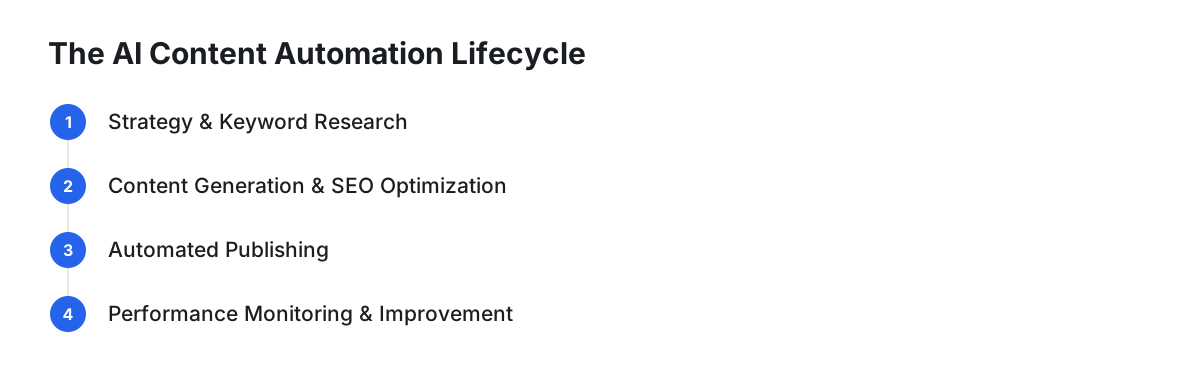
A comprehensive system for automating content manages every stage of the content journey. It transforms content marketing from a series of manual tasks into a strategic, automated engine for growth. Here’s a breakdown of the key stages:
Strategy & Keyword Research: The process begins with understanding what to write about. Advanced automation platforms analyze your website, competitors, and industry to identify high-opportunity, buyer-intent search terms. Instead of you spending hours in keyword tools, the AI surfaces topics with the highest potential to attract qualified traffic.
Content Generation & SEO Optimization: Once a keyword is selected, the system generates a full, SEO-optimized article. This includes not just the body text but also critical on-page elements like H1s, meta descriptions, subheadings (H2s, H3s), and proper keyword integration. The content is structured from the ground up to rank on search engines.
Automated Publishing: The generated content is then pushed directly to your content management system (CMS) on a pre-set schedule. Whether you use WordPress, Shopify, Webflow, or a custom-coded site via a Content API, the system handles the publishing workflow. This ensures a consistent publishing cadence, a key factor in SEO success.
Performance Monitoring & Improvement: This is where true automation platforms separate from simple generators. After an article is published, the system doesn't just stop. It integrates with tools like Google Search Console to monitor keyword rankings and traffic. This creates a powerful feedback loop. Based on performance data, the system can automatically identify underperforming content and improve it. For example, it might rewrite weak titles for better click-through rates, refresh fading posts with new information, or work to push page-2 articles onto page 1.
What Are Common Examples of AI Content Automation?
While the concept is versatile, it's most impactful when applied to high-volume, process-driven content needs. Here are the most common applications for businesses today:
- Blog & SEO Content: This is the primary use case for driving organic growth. An automated system can run a company's entire blog, from finding untapped keywords to publishing a steady stream of high-quality articles. This consistency builds topical authority and steadily increases search traffic over time.
- Social Media Management: Automation tools can take a core piece of content, like a blog post, and automatically generate dozens of platform-specific social media updates. It can create tweets, LinkedIn posts, and Facebook updates, all tailored to the format and tone of each network, and schedule them for optimal engagement.
- Programmatic SEO (pSEO): For businesses that need to create thousands of similar pages targeting specific long-tail keywords (e.g., "{service} in {city}"), AI automation is essential. It can generate unique, valuable content for each page variation at a scale that would be impossible for a human team.
- E-commerce Product Descriptions: Online stores with large inventories can use AI to write unique, compelling, and SEO-friendly descriptions for every product. This saves countless hours of manual writing and helps products get discovered through search.
Choosing Your AI Content Automation Software
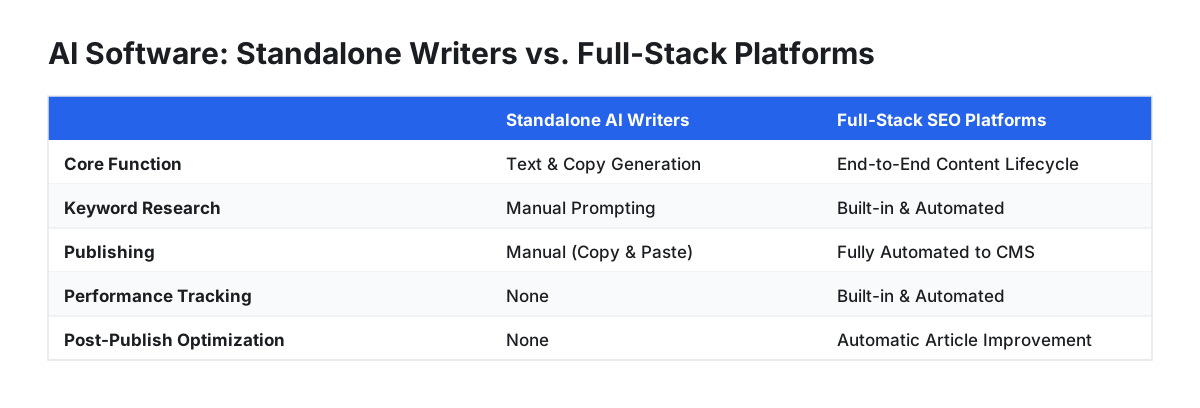
Not all tools labeled 'AI-powered content automation' are created equal. They generally fall into three distinct categories, each suited for different needs and levels of technical expertise. Understanding these differences is key to choosing the right solution.
| Feature | Standalone AI Writers | Workflow Automators | Full-Stack SEO Platforms |
|---|---|---|---|
| Core Function | Text & Copy Generation | Connecting Disparate Apps | End-to-End Content Lifecycle |
| Keyword Research | Manual Prompting | Requires 3rd-Party Integration | Built-in & Automated |
| Publishing | Manual (Copy & Paste) | Automated (Requires Setup) | Fully Automated to CMS |
| Performance Tracking | None | Requires 3rd-Party Integration | Built-in & Automated |
| Post-Publish Optimization | None | Not Possible | Automatic Article Improvement |
| Setup Effort | Very Low | High | Low (URL-based) |
| Ideal User | Individual Content Creators | Tech-savvy Marketers | Founders, Agencies, SMBs |
- Standalone AI Writers: These tools are excellent for drafting copy, brainstorming ideas, or overcoming writer's block. They perform a single function: generating text based on your input. They are not automation systems on their own.
- Workflow Automators: Tools like Zapier or n8n allow you to connect different applications to create custom workflows. For example, you could connect a keyword tool to an AI writer and then to your CMS. This offers flexibility but requires significant technical setup, ongoing maintenance, and subscriptions to multiple services.
- Full-Stack SEO Platforms: This category represents true content automation. These platforms, like PilotScribe, are all-in-one systems designed specifically for running a blog on autopilot. They handle everything from site analysis and keyword discovery to writing, publishing, and post-publication optimization within a single, unified interface.
Manually connecting these pieces is complex, and workflow automators can be brittle. A true end-to-end platform simplifies this entire process. PilotScribe acts as your complete solution for blog SEO, handling everything from keyword discovery to publishing and performance optimization on complete autopilot.
The Rise of AI Agents: True "Set and Forget" Automation
The next frontier in automating content is the use of AI agents. An AI agent is an autonomous system that can understand a high-level goal and independently execute the multi-step tasks required to achieve it. Instead of configuring a workflow, you give the agent a prompt like, "Analyze my website, find relevant keywords, and start publishing two SEO articles per week."
This is a fundamental shift from traditional software. An agent-based system can make decisions, self-correct, and manage the entire operational process. For example, PilotScribe offers an MCP (AI agent) server that allows advanced AI assistants to connect directly to the platform. An agent can perform all in-app functions, from adding and configuring a new site to generating articles and connecting a CMS, all driven by conversational prompts.
This capability represents the ultimate form of delegation. It allows founders and marketers to offload their entire content marketing operation to an AI that can manage the process end-to-end, moving beyond simple task automation to true operational autonomy.
FAQ
Which AI tool is best for generating content?
The best tool depends entirely on your goal. For simple text drafting or brainstorming, a standalone AI writer is effective. For a complete, automated SEO content strategy that includes research, writing, publishing, and ongoing performance optimization, a full-stack platform is the superior choice as it manages the entire lifecycle.
Can you make money with AI automation?
Yes, absolutely. You can generate revenue with this technology in several ways: by scaling your own blog to drive organic traffic, leads, and sales; by offering automated content creation and SEO services to clients as an agency; or by significantly reducing content production costs, which directly improves profitability.